The current Working Time Directive (WTD) legislation for EU countries was introduced in 2011. Many drivers and their employers still struggle to understand the complex and confusing rules set by Government especially when combining it with EU drivers’ hours legislation.
If you drive a goods vehicle in the UK or EU, there are complicated rules that will apply to your journey that govern how many hours you can drive for and the number of rests you take. These rules therefore apply to all drivers in the waste management industry. But how should you record your hours spent driving and when do you need to take a rest break?
If the vehicle that you drive exceeds 3.5 tonnes and where the vehicle is used within the UK or between the UK and other EU countries, Assimilated Rules (formerly known as EU Rules) will apply to your HGV driver hours.
Assimilated Rules (formerly EU Driver Hours Rules)
Assimilated drivers’ hours rules apply to most goods vehicles over 3.5 tonnes operating within the UK or between the UK and EU countries, unless an exemption applies. These rules require drivers to record their activities using a tachograph and limit driving time to:
- 9 hours in a day (this can increase to 10 hours twice a week)
- 56 hours in a week
- 90 hours in any 2 consecutive weeks
The separate AETR rules apply to certain international journeys, particularly those travelling to or through countries outside the EU that are signatories to the AETR agreement. Although the driving-time limits are largely the same, some rest-period requirements differ.
For full details, see the DVSA guidance on drivers’ hours and tachographs.
Assimilated Rules on Breaks
The key points of the assimilated rules on breaks and rest are that a driver must take:
- at least 11 hours rest every day – you can reduce this to 9 hours rest 3 times between any 2 weekly rest periods
- an unbroken rest period of 45 hours every week – you can reduce this to 24 hours every other week
- a break or breaks totalling at least 45 minutes after no more than 4 hours 30 minutes driving
- your weekly rest after 6 consecutive 24-hour periods of working, starting from the end of the last weekly rest period taken
For example, if a driver starts work at 8am on day one then by 8am on day two, a HGV driver’s hours must have completed either:
- 11 hours uninterrupted regular daily rest period
- 12 hours split daily rest period taken in two separate periods (min 3 hours and min 9 hours)
OR
- A reduced daily rest period, only if entitled, of a minimum of 9 hours (but less than 11 hours) uninterrupted
Working Time Directive Rules
The rules governing drivers’ hours and working time are separate but operate alongside one another. Drivers subject to assimilated or AETR drivers’ hours rules are generally also covered by the Road Transport (Working Time) Regulations 2005.
Drivers’ hours rules limit the time spent driving and establish mandatory driving breaks and rest periods. Working-time regulations cover the wider working day, including driving, loading, unloading, vehicle maintenance and other duties.
Drivers operating under GB domestic drivers’ hours rules are generally covered by the Working Time Regulations 1998 instead, although the precise requirements depend on the nature of their work and any applicable exemptions.
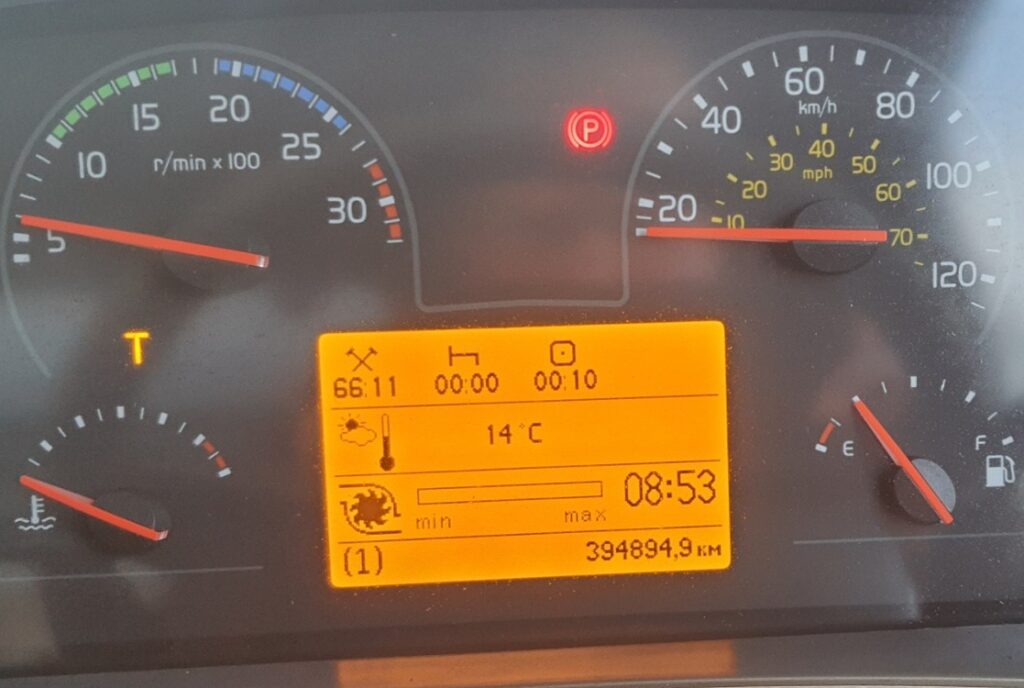
Under the Road Transport (Working Time) Regulations 2005, working time must not exceed an average of 48 hours per week over the applicable reference period, normally 17 weeks. This can be extended to 26 weeks through a collective or workforce agreement.
Working time may reach 60 hours in an individual week, provided the 48-hour average is maintained. Where night work is performed, working time is generally limited to 10 hours in any 24-hour period unless a permitted agreement provides otherwise.
Unlike the general Working Time Regulations, there is no individual opt-out from the 48-hour average for mobile workers covered by the road transport regulations.
The DVSA and Department for Transport have published a handy guide to the basic rules on HGV drivers’ hours which can be found by clicking the button below.
WTD Breaks
Drivers following the working time directive must not work for more than 6 hours without a break, and that break should last at least 15 minutes. If working for a total of between 6 and 9 hours, you must take a 30-minute break.
This also applies to mobile workers. The 30 minutes of break time can be made up of two 15-minute breaks. If driver hours exceed 9 hours, then a break of 45 minutes must be taken. And beyond that, if a shift contains more than 9 hours of working time a break period totalling 45 minutes must take place.
For drivers covered by assimilated or AETR drivers’ hours rules, the Road Transport (Working Time) Regulations 2005 generally follow the same daily and weekly rest requirements. Drivers may take daily rest periods in their vehicle, provided it is stationary and has suitable sleeping facilities. However, regular weekly rest periods of at least 45 hours must not be taken in the vehicle.
So, now that that is all clear (!) what does this mean for HGV drivers and specifically drivers of trucks supplied by MHF (UK) Ltd?
Working time includes more than just driving. Under the Road Transport (Working Time) Regulations 2005, it also includes other duties connected with the transport operation, such as:
- Driving
- Loading and unloading (read our article on HGV loading regulations here)
- Industry specific driver training
- Vehicle cleaning and maintenance
- Supervising the loading and unloading of goods relating to the vehicle
- Daily vehicle defect check and report (read our article on daily HGV inspections here)
- Time spent waiting for duties to commence, when the driver is required to be with the vehicle
Working time does not normally include commuting between home and the usual place of work, statutory breaks or daily and weekly rest periods. It also excludes qualifying periods of availability, such as waiting time where the duration is known in advance and the driver is not required to carry out other duties. However, waiting time of an unknown duration may count as working time.
Vehicle movements that may fall outside drivers’ hours rules
Certain vehicle movements may fall outside assimilated or AETR drivers’ hours rules. This can apply where a driver is employed to drive vehicles that would normally fall within scope, but does not carry goods or passengers during that employment.
Examples include:
- Delivering or collecting a hire vehicle.
- Driving an empty vehicle to or from an annual test or repair facility.
- Moving vehicles between depots.
- Delivering or collecting a new or demonstrator vehicle.
- Driving a vehicle to be scrapped.
Important: These exclusions depend on the driver’s employment and the nature of the journey. They do not apply simply because a vehicle is travelling empty. For example, an empty journey to position a vehicle for an ongoing transport operation covered by the rules remains in scope.
For agency drivers, the assessment applies to each individual placement.
See the DVSA’s official drivers’ hours guidance for the full conditions.
Driving under Assimilated Rules and WTD
If you work partly under assimilated (previously called EU rules) or AETR rules and partly under GB domestic rules during a day or a week you must:
- take assimilated or AETR daily rest periods, as well as a weekly rest period
- not count the time you spend driving under assimilated or AETR rules as an off-duty period under GB domestic rules
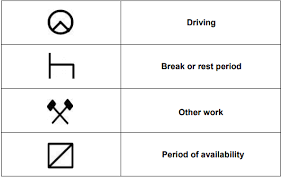
- understand that driving under GB domestic rules counts as ‘other work’, not as a break or rest period
- understand that driving or being on duty under assimilated or AETR rules counts towards the driving and duty limits under GB domestic rules
Full guidance can be found on the GOV.UK website
And finally…
It must be stressed that in any situation, the health, safety and welfare of drivers should not be compromised at any time. The assimilated rules and the working time directive exist to protect road safety for everyone and drivers’ working conditions.
Both AETR and GB drivers’ hours rules automatically cease to apply in emergency situations where immediate preventative action is needed to avoid, amongst other things, danger to the life of people.
The GOV.UK website has detailed information about all aspects driving regulations. The information on their website is updated frequently and should be used for any queries relating to HGV driving rules under Assimilated Rules and the WTD.
Frequently Asked Questions
What are the EU driver hours regulations?
The EU driver hour rules are a set of regulations enforced by the EU to limit the hours that HGV drivers (of lorries over 3.5 tonnes, buses or coaches with more than 10 seats) can work.
What is the Working Time Directive?
The Working Time Directive is commonly used to describe rules limiting working hours and establishing minimum breaks and rest requirements. For UK HGV drivers covered by assimilated or AETR drivers’ hours rules, the relevant legislation is generally the Road Transport (Working Time) Regulations 2005. These regulate total working time, while separate drivers’ hours rules govern driving limits and driving breaks.
How should I record my driving hours and breaks?
The majority of HGVs are fitted with smart tachographs, which make the recording and keeping track of driving hours, rest breaks and other work related duties very simple.